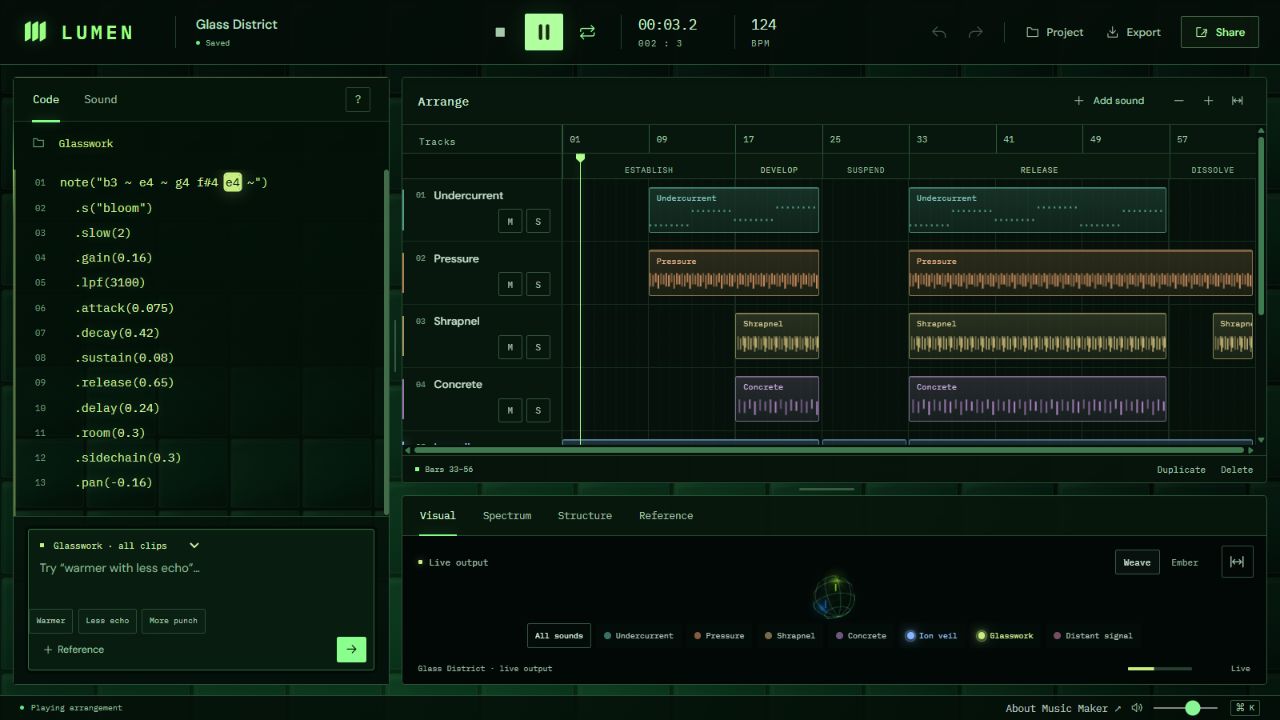
Code, arrangement, and sound
Music Maker explores code as a musical interface. Its later studio implementation, Lumen, connects a code editor with an arrangement timeline, sound controls, and audio analysis so that they describe the same music.
Real audio, visible changes
The studio has user-started playback, per-track controls, an audio-reactive visual, and before-and-after listening for supported edits. Prompt edits use supported on-device rules. The visual response is tied to sound measurements rather than a decorative waveform.
One document, multiple views
A versioned project document connects source patterns, clips, instruments, and audio assets. The custom pattern parser schedules Web Audio events without evaluating arbitrary JavaScript. Real-time playback and offline export use the same event plan; audio analysis is computed from rendered sound. Editing a pattern affects every clip that uses it.
Making a session portable
Work is saved on the current device using IndexedDB. A downloaded project file can include imported recordings, while smaller projects can travel in a snapshot link. WAV export renders audio locally in the browser. Sound editing supports a defined set of on-device rules; it does not require a hosted AI service.